


 Aristotle University of Thessaloniki
Titles
- Dipl. Mech. Eng., AUTh
- Dr. Mech. Eng., AUTh
- Visiting research professor at the Finnish Meteorological Institute (June-July 2012, May 2013)
Editorial Board member and Conference Chair
- Environmental Informatics and Modelling (Springer), book series co-editor (2017-today)
- Atmosphere (MDPI), editorial board member (2019-today)
- Journal of Information and Telecommunication (Taylor & Francis), editorial board member (2023-today)
- Member of the Task Force on “Thresholds of allergen exposure in allergen immunotherapy outcome analysis” of the European Academy of Allergy and Clinical Immunology.
- Enviroinfo2020: Environmental Informatics – Sustainability aware digital twins for urban smart environments. General chair
Τομέας: Energy
Βαθμίδα: Professor
Ειδικότητα: Environmental Informatics
Τηλέφωνο: +302310994176
Email: kkara@auth.gr
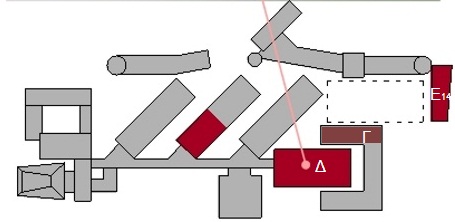
Γραφείο: Building E14, Ground Floor
Ώρες Συνεργασίας: Tuesday & Wednesday 12:30-14:00 (it is advisable to email me in advance). Alternative days and hours also available on the basis of email communication
Ερευνητικά Ενδιαφέροντα:
- Environmental Informatics
- Informatics & Computational Intelligence for Engineering problem solving
Scientific activities
- Computational Intelligence for data-oriented analysis and modelling in the fields of:
- Air quality assessment and management (physical, chemical and biological weather-aerobiology)
- Energy
- Investigation and modelling of the behaviour and performance of mechanical engineering systems (vehicle exaust aftertreatment, rolling bearings, turbomachines, etc)
- Medicine (allergology, internal medicine etc)
- Environmental information services for quality of life support
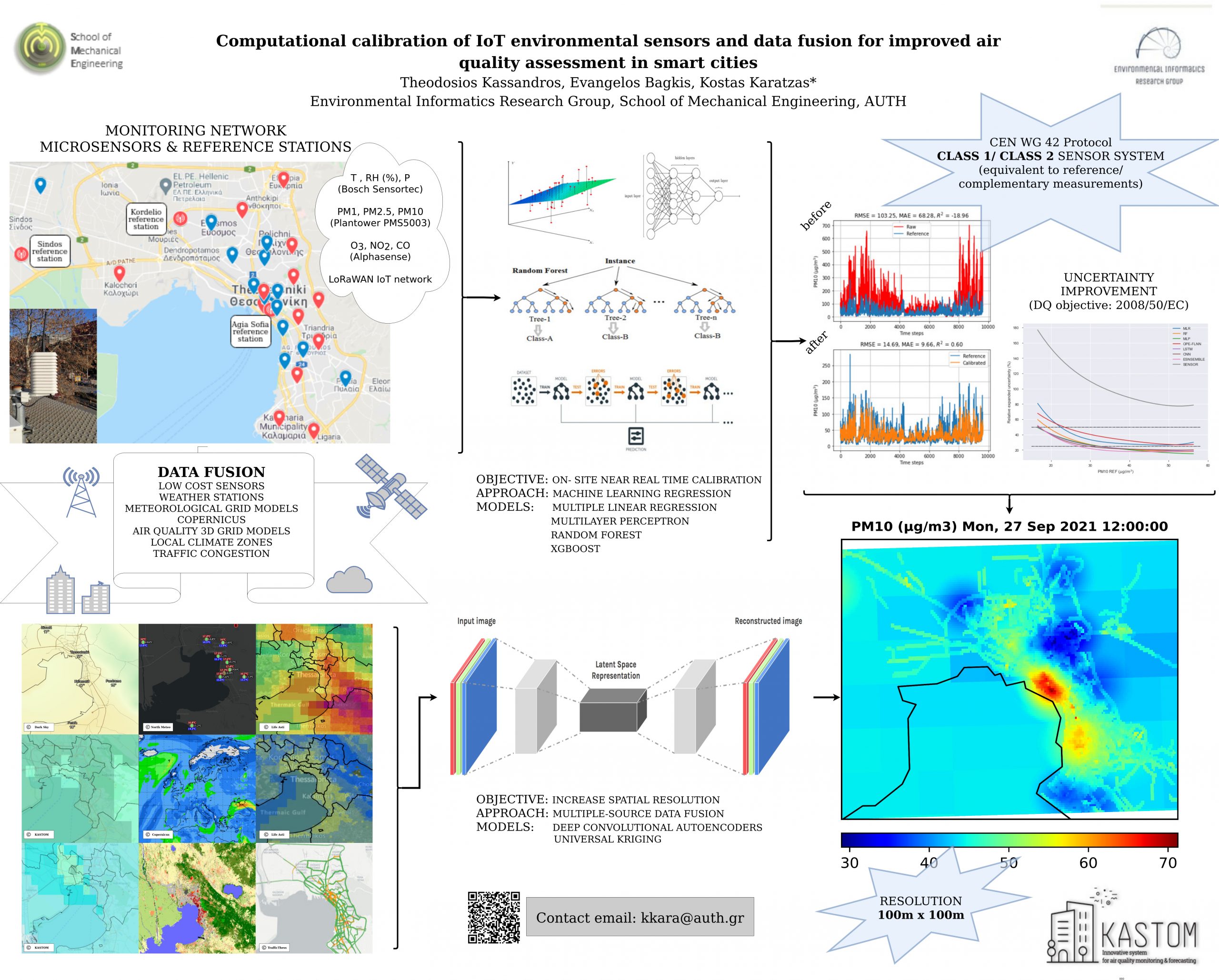
- Air quality sensors-low cost microsensors
- Analysis and computational improvement of their behaviour
- Citizen science
- Open Geospatial Consortium standards
Graduate courses taught:
- Informatics
- Environmental Informatics
- Air Pollution
MSc courses taught:
- Computational Environmental Physics. MSc in Computational Physics.
- Modelling of environmental data for the design of electronic information services . MSc in Environmental Physics
- Air Pollution . MSc in Environmental Protection and Sustainable Development
- Biomedical engineering and global (environmental) challenges. MSc in BioMedical Engineering
- Experimental Methods in Vibrations. THRUST – Erasmus Mundus Master’s Programme in Aeromechanics (paused from 2019-20).
Summer Schools
Current and future airt pollution management: perspectives of new sensor technologies (September 2019)
Επιλεγμένες Δημοσιεύσεις:
In year descenting order
- Bagkis E., Kassandros Th., Karatzas K., (2022). Learning calibration functions on the fly: Hybrid batch-online stacking ensembles for the calibration of low-cost air quality sensor networks in the presence of concept drifts, Atmosphere, 13(3), 416. https://doi.org/10.3390/atmos13030416
- Kontos Y.N., Kassandros T., Perifanos K., Karampasis M., Katsifarakis K.L., Karatzas K. (2022), Machine Learning for Groundwater Pollution Source Identification and Monitoring Network Optimization, Neural Computing and Applications, https://doi.org/10.1007/s00521-022-07507-8
- Viana, M.; Karatzas, K.; Arvanitis, T.; Reche, C.; Escribano, M.; Ibarrola-Ulzurrun, E.; Adami, P.E.; Garrandes, F.; Bermon, S (2022), Air Quality Sensors Systems as Tools to Support Guidance in Athletics Stadia for Elite and Recreational Athletes. J. Environ. Res. Public Health 2022, 19(6), 3561; https://doi.org/10.3390/ijerph19063561
- Bagkis Ε., Kassandros T., Karteris Μ., Karteris Α., Karatzas Κ (2021), Analyzing and Improving the Performance of a Particulate Matter Low Cost Air Quality Monitoring Device. Atmosphere 12(2), 251. https://doi.org/10.3390/atmos12020251
- Furxhi I., Murphy F., Mullins M., Arvanitis A., Poland C. (2020), Practices and Trends of Machine Learning Application in Nanotoxicology, Nanomaterials 10(1):116; doi:10.3390/nano10010116
- Vohland K., Sauermann H., Antoniou V., Balazs B., Göbel C., Karatzas K., Mooney P., Perelló J., Ponti M., Samson R. and Winter S. (2020). Citizen Science and Sustainability Transitions. Research Policy 49(5), https://doi.org/10.1016/j.respol.2020.103978
- Borrego C., Costa A.M., Ginja J., Amorim M., Karatzas K., Sioumis Th., Katsifarakis N., Konstantinidis K., De Vito S., Esposito E., Smith P., André N., Gérard P., Francis L.A.,. Castell N., Viana M., Minguillón M.C., Reimringen W., Otjes R.P., v.Sicard O., Pohle R., Elen B., Suriano D., Pfister V., Prato M., Dipinto S., Penza M. (2018), Assessment of air quality microsensors versus reference methods: The EuNetAir joint exercise– part II, Atmospheric Environment 193, pp. 127-142, https://doi.org/10.1016/j.atmosenv.2018.08.028
- Karatzas K., Papamanolis L., Katsifarakis N., Riga M. B. Werchan, M. Werchan, U. Berger, and K.C. Bergmann (2018), Google Trends reflect allergic rhinitis symptoms related to birch and grass pollen seasons, Aerobiologia 34(4), pp. 437-444, https://doi.org/10.1007/s10453-018-9536-4
- Karatzas K. and Katsifarakis N. (2018), Modelling of Household Electricity Consumption with the Aid of Computational Intelligence Methods. Advances in Building Energy Research 12(1), pp. 84-96, https://doi.org/10.1080/17512549.2017.1314831
- Katsifarakis N., Riga M., Voukantsis D. and Karatzas K. (2016), Computational Intelligence methods for rolling bearing fault detection, Journal of the Brazilian Society of Mechanical Sciences and Engineering 38 (6), pp. 1565-1574. doi:10.1007/s40430-015-0458-6
Υποψήφιοι Διδάκτορες:
- Theodosios Kassandros (Dipl. Phys., MSc. Comp. Phys): Analysis and modelling of environmental sensors
- Evangelos Bagkis (Dipl. Phys., MSc. Comp. Phys): Computational improvement of low-cost sensors in real time
- Thomas Tasioulis (MEng in Civil Engineering, MSc Env. Prot. & Sust. Dev., MSc in Data Science): Development of a computational framework for the analysis and explainable modelling of environmental – air quality data
PhDs:
- Dimitris Voukantsis:Environmental Informatics with Computational Intelligence Methods in Mechanical Engineering problems (2011)
- Ioannis Kyriakidis: A Methodology for improved, Data-Oriented, Air Quality Forecasting. Univesity of South Wales, UK. (2018)
- Marina Riga: Information Technology and Computational Intelligence methods for Participatory Environmental Sensing applications (2020)
Βιογραφικό Σημείωμα: Συνημμένο Αρχείο
Titles
- Dipl. Mech. Eng., AUTh
- Dr. Mech. Eng., AUTh
- Visiting research professor at the Finnish Meteorological Institute (June-July 2012, May 2013)
Editorial Board member and Conference Chair
- Environmental Informatics and Modelling (Springer), book series co-editor (2017-today)
- Atmosphere (MDPI), editorial board member (2019-today)
- Journal of Information and Telecommunication (Taylor & Francis), editorial board member (2023-today)
- Member of the Task Force on “Thresholds of allergen exposure in allergen immunotherapy outcome analysis” of the European Academy of Allergy and Clinical Immunology.
- Enviroinfo2020: Environmental Informatics – Sustainability aware digital twins for urban smart environments. General chair
Field: Energy
Rank: Professor
Expertise: Environmental Informatics
Telephone: +302310994176
Email: kkara@auth.gr
Office: Building E14, Ground Floor
Student Reception: Tuesday & Wednesday 12:30-14:00 (it is advisable to email me in advance). Alternative days and hours also available on the basis of email communication
Research fields:
- Environmental Informatics
- Informatics & Computational Intelligence for Engineering problem solving
Scientific activities
- Computational Intelligence for data-oriented analysis and modelling in the fields of:
- Air quality assessment and management (physical, chemical and biological weather-aerobiology)
- Energy
- Investigation and modelling of the behaviour and performance of mechanical engineering systems (vehicle exaust aftertreatment, rolling bearings, turbomachines, etc)
- Medicine (allergology, internal medicine etc)
- Environmental information services for quality of life support
- Air quality sensors-low cost microsensors
- Analysis and computational improvement of their behaviour
- Citizen science
- Open Geospatial Consortium standards
Graduate courses taught:
- Informatics
- Environmental Informatics
- Air Pollution
MSc courses taught:
- Computational Environmental Physics. MSc in Computational Physics.
- Modelling of environmental data for the design of electronic information services . MSc in Environmental Physics
- Air Pollution . MSc in Environmental Protection and Sustainable Development
- Biomedical engineering and global (environmental) challenges. MSc in BioMedical Engineering
- Experimental Methods in Vibrations. THRUST – Erasmus Mundus Master’s Programme in Aeromechanics (paused from 2019-20).
Summer Schools
Current and future airt pollution management: perspectives of new sensor technologies (September 2019)
Papers:
In year descenting order
- Bagkis E., Kassandros Th., Karatzas K., (2022). Learning calibration functions on the fly: Hybrid batch-online stacking ensembles for the calibration of low-cost air quality sensor networks in the presence of concept drifts, Atmosphere, 13(3), 416. https://doi.org/10.3390/atmos13030416
- Kontos Y.N., Kassandros T., Perifanos K., Karampasis M., Katsifarakis K.L., Karatzas K. (2022), Machine Learning for Groundwater Pollution Source Identification and Monitoring Network Optimization, Neural Computing and Applications, https://doi.org/10.1007/s00521-022-07507-8
- Viana, M.; Karatzas, K.; Arvanitis, T.; Reche, C.; Escribano, M.; Ibarrola-Ulzurrun, E.; Adami, P.E.; Garrandes, F.; Bermon, S (2022), Air Quality Sensors Systems as Tools to Support Guidance in Athletics Stadia for Elite and Recreational Athletes. J. Environ. Res. Public Health 2022, 19(6), 3561; https://doi.org/10.3390/ijerph19063561
- Bagkis Ε., Kassandros T., Karteris Μ., Karteris Α., Karatzas Κ (2021), Analyzing and Improving the Performance of a Particulate Matter Low Cost Air Quality Monitoring Device. Atmosphere 12(2), 251. https://doi.org/10.3390/atmos12020251
- Furxhi I., Murphy F., Mullins M., Arvanitis A., Poland C. (2020), Practices and Trends of Machine Learning Application in Nanotoxicology, Nanomaterials 10(1):116; doi:10.3390/nano10010116
- Vohland K., Sauermann H., Antoniou V., Balazs B., Göbel C., Karatzas K., Mooney P., Perelló J., Ponti M., Samson R. and Winter S. (2020). Citizen Science and Sustainability Transitions. Research Policy 49(5), https://doi.org/10.1016/j.respol.2020.103978
- Borrego C., Costa A.M., Ginja J., Amorim M., Karatzas K., Sioumis Th., Katsifarakis N., Konstantinidis K., De Vito S., Esposito E., Smith P., André N., Gérard P., Francis L.A.,. Castell N., Viana M., Minguillón M.C., Reimringen W., Otjes R.P., v.Sicard O., Pohle R., Elen B., Suriano D., Pfister V., Prato M., Dipinto S., Penza M. (2018), Assessment of air quality microsensors versus reference methods: The EuNetAir joint exercise– part II, Atmospheric Environment 193, pp. 127-142, https://doi.org/10.1016/j.atmosenv.2018.08.028
- Karatzas K., Papamanolis L., Katsifarakis N., Riga M. B. Werchan, M. Werchan, U. Berger, and K.C. Bergmann (2018), Google Trends reflect allergic rhinitis symptoms related to birch and grass pollen seasons, Aerobiologia 34(4), pp. 437-444, https://doi.org/10.1007/s10453-018-9536-4
- Karatzas K. and Katsifarakis N. (2018), Modelling of Household Electricity Consumption with the Aid of Computational Intelligence Methods. Advances in Building Energy Research 12(1), pp. 84-96, https://doi.org/10.1080/17512549.2017.1314831
- Katsifarakis N., Riga M., Voukantsis D. and Karatzas K. (2016), Computational Intelligence methods for rolling bearing fault detection, Journal of the Brazilian Society of Mechanical Sciences and Engineering 38 (6), pp. 1565-1574. doi:10.1007/s40430-015-0458-6
PhD Candidates:
- Theodosios Kassandros (Dipl. Phys., MSc. Comp. Phys): Analysis and modelling of environmental sensors
- Evangelos Bagkis (Dipl. Phys., MSc. Comp. Phys): Computational improvement of low-cost sensors in real time
- Thomas Tasioulis (MEng in Civil Engineering, MSc Env. Prot. & Sust. Dev., MSc in Data Science): Development of a computational framework for the analysis and explainable modelling of environmental – air quality data
PhDs:
- Dimitris Voukantsis:Environmental Informatics with Computational Intelligence Methods in Mechanical Engineering problems (2011)
- Ioannis Kyriakidis: A Methodology for improved, Data-Oriented, Air Quality Forecasting. Univesity of South Wales, UK. (2018)
- Marina Riga: Information Technology and Computational Intelligence methods for Participatory Environmental Sensing applications (2020)
CV: Attached File